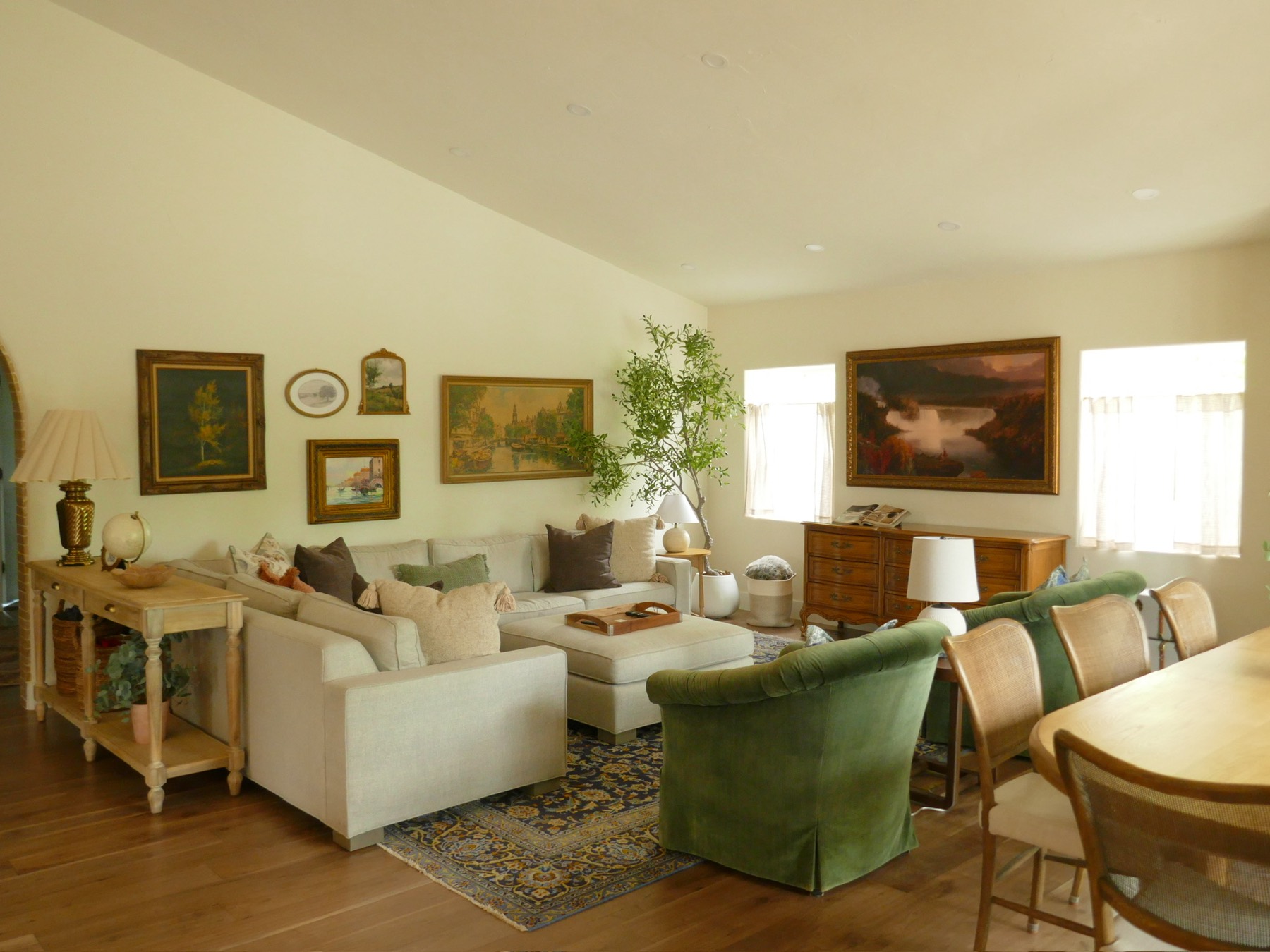
Every designer has a little black book — the showrooms, the rug dealer who remembers your name, the lighting shop that rewires the good stuff before it sells. Ours took years of sourcing whole houses to build, and we're handing it over. Whether you're after one anchor piece or slowly layering a room, here's where we actually shop in Denver.
Rugs — buy the rug first
We almost always start a room with the rug. It sets the palette, the scale, and the mood before anything else walks in, and a good one outlives every trend. Denver is spoiled for handmade and vintage:
- Azari Rug Gallery — handmade antique, modern, tribal, and vintage, plus the boring-but-crucial services: cleaning, restoration, appraisals, and in-home consults so you can see a rug in your own light before committing.
- Modern Nomad (Golden Triangle) — rugs from all over, vintage and new, in a space that's a pleasure to wander even empty-handed.
- Chez Mémé — the one for vintage Turkish and Persian rugs with real patina.
- Nazmiyal — when you want an antique Persian carpet with genuine provenance.
Lighting — where you steal some soul
Lighting is the most underrated way to make a room feel collected instead of builder-grade. We sneak at least one vintage fixture into almost every project; it's the fastest shortcut to age and character.
- Bonnie Brae Lighting & Repair — a deep bench of vintage and antique fixtures, every one rewired before it sells, so a hundred-year-old sconce is ready to hang. It's right by the ice cream shop, which is a hazard.
- Circa Lighting (Denver Design District) — for the new, beautifully made decorative fixtures — table, ceiling, wall, floor — when you want polish rather than patina.
Tile & stone — go see it in person
Tile is where a bathroom either sings or falls flat, and a screen will lie to you about it — you can't judge how a glaze catches light or how a stone veins until you're holding it.
For a properly curated tile and stone showroom, Ann Sacks in Cherry Creek (on St Paul St) is the benchmark. More broadly, the Denver Design District is the city's hub for to-the-trade showrooms — tile and stone well among them — which is worth knowing for reasons we'll get to.
The quickest way to make a room feel collected instead of catalog-ordered is to mix one piece with some age on it into every space — a rug, a lamp, a single old chair.
Décor & vintage — the finishing layer
This is the layer that says a real person lives here, not a staging company. We mix tightly curated shops with dig-for-treasure malls, and you should too:
- Rogala Design Shop (S. Broadway) — a sharp little mix of home goods, furniture, rugs, and candles; hard to leave empty-handed.
- Brass Armadillo — a vast antique mall for when you're in the mood to hunt.
- Mid-Mod Mall (Highlands) — mid-century, clean lines, the fluent room if that's your language.
- Modern Nomad again — worth a second loop for décor beyond the rugs.
Where to splurge, where to save
You don't need a designer budget on everything — you need to know which two or three pieces are doing the heavy lifting. Our rule:
- Splurge on the rug, the statement light, and any big upholstered piece you'll keep a decade.
- Save on accessories, smaller décor, and secondhand finds from the antique malls — where the vintage hunting adds character and saves money in the same trip.
One quiet thing worth knowing, as of 2026: a lot of the best showrooms — much of the Denver Design District included — are "to the trade," meaning you reach them through a designer who can pull pricing and lines you can't get on your own. It's one of the least-glamorous, most-useful reasons a designer often pays for themselves.
Consider this your starting map. And if assembling all of it — the right rug, the perfect light, tile you're glad to see every morning — sounds like more than you want to take on, that's the part we love most.
← Back to The Journal