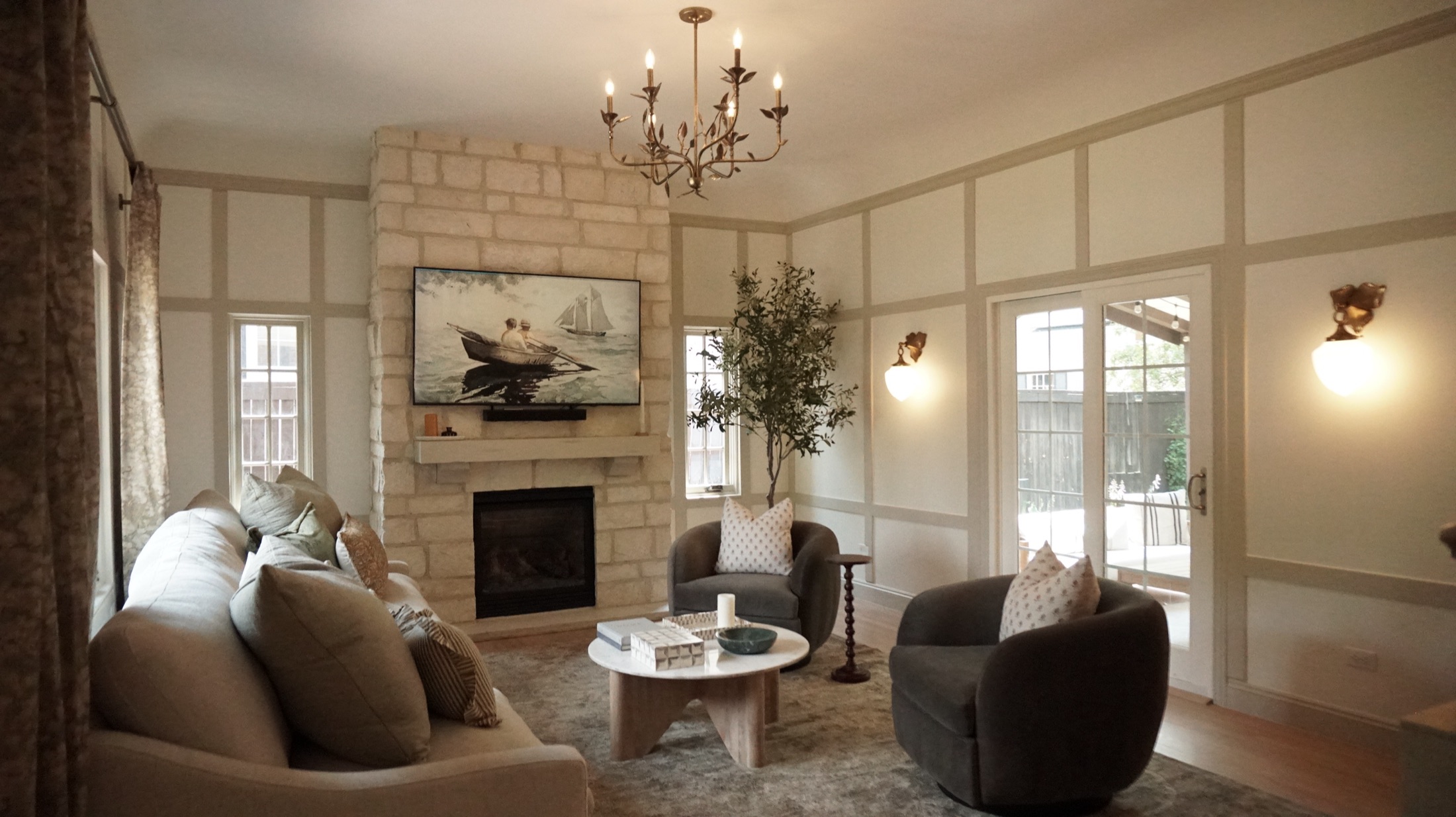
Renovating near Sloan's Lake means working with two very different housing stocks at once: solid 1920s brick that has good bones but dated layouts, and newer infill built to modern code. Most projects here come down to deciding how much old character to keep and how much to open up. The lake and the close-in West Denver location make almost any home worth the investment, which is why this is one of the city's busiest remodel zones.
What are the homes around Sloan's Lake like?
The original housing is mostly 1920s brick: bungalows, Tudors, and Mediterranean and Spanish revivals sitting on tree-shaded blocks. These are well-built, compact homes with the quirks you'd expect from that era. Small closets, chopped-up rooms, one bathroom doing a lot of work. Mixed in among them is a wave of newer construction, because Sloan's Lake has been one of Denver's fastest-changing neighborhoods for years. On a single block you might see:
- An original brick bungalow with its front porch intact
- A modern infill home or two on what used to be one lot
- A row of new townhomes
- An older one-story that's grown a second floor
That mix is the whole character of the area. It's old Denver and new Denver on the same street.
Should you remodel the old bungalow or go modern?
It depends on what drew you to the house, but you rarely have to pick one extreme. The brick bungalows and revivals were built to last, and that masonry, the arched doorways, the original wood are hard to replicate. Tearing all of that out to chase a fully modern look usually means paying to lose the thing that made the house special.
The more common path is keeping the structure and the best original details while modernizing how the home actually functions. Open the kitchen to the living space, add a real primary bath, improve insulation and windows, fix the layout. You get period character and a home that works the way people live now.
The brick is the reason you bought the house. Renovate around it, not over it.
Why are pop-tops so common around Sloan's Lake?
Because the location is too good to leave, and a lot of the original homes are small one-stories. A pop-top, adding a second floor to an existing house, lets people stay near the lake and the close-in commute instead of moving out to find more space. For families and young professionals who want both square footage and this address, it's a genuinely practical option rather than a compromise.
Views factor in too. Sloan's Lake gives you water, the downtown skyline, and the mountains behind it, and a second story can put windows where they finally catch all three. A few things to weigh before going up:
- Whether your existing foundation and framing can carry another floor
- Local zoning, height limits, and setback rules
- How a second story reads against the original one-story massing
- Where to place windows so you actually capture the lake or mountain views
How do you blend old brick character with a modern update?
The trick is letting the old and new each be themselves instead of forcing a fake match. Original brick, plaster, and millwork can stay rich and warm; the new work can be clean and simple and let the old details stand out. A modern kitchen reads beautifully against a 1920s brick wall as long as you're not pretending the addition was always there. A few moves that hold up here:
- Repair and keep original brick, trim, and built-ins wherever they survive
- Use restrained, current finishes so the historic details lead
- Match scale and proportion, even when materials are new
- Keep the street-facing character intact and do bolder work in back or up top
Quick answers
Are Sloan's Lake homes worth remodeling instead of replacing?
Usually yes. The original brick homes have strong structure and character that's expensive to replicate, so remodeling around them tends to make more sense than tearing down.
Can you add a second story to a Sloan's Lake bungalow?
Often, yes. Pop-tops are common here, but it depends on your existing foundation, framing, and local zoning, so it's worth confirming feasibility before you plan.
Will a modern update ruin the historic feel?
Not if it's done with restraint. Keeping original brick and details while modernizing the layout and finishes lets the home feel current without erasing its history.
At The Curated Room, we work on both sides of Sloan's Lake's split personality, the old brick and the new build, as a design-build and interior design studio. If you're weighing a remodel, a pop-top, or a full rethink of how your home lives, we're happy to walk the space with you.
← Back to The Journal