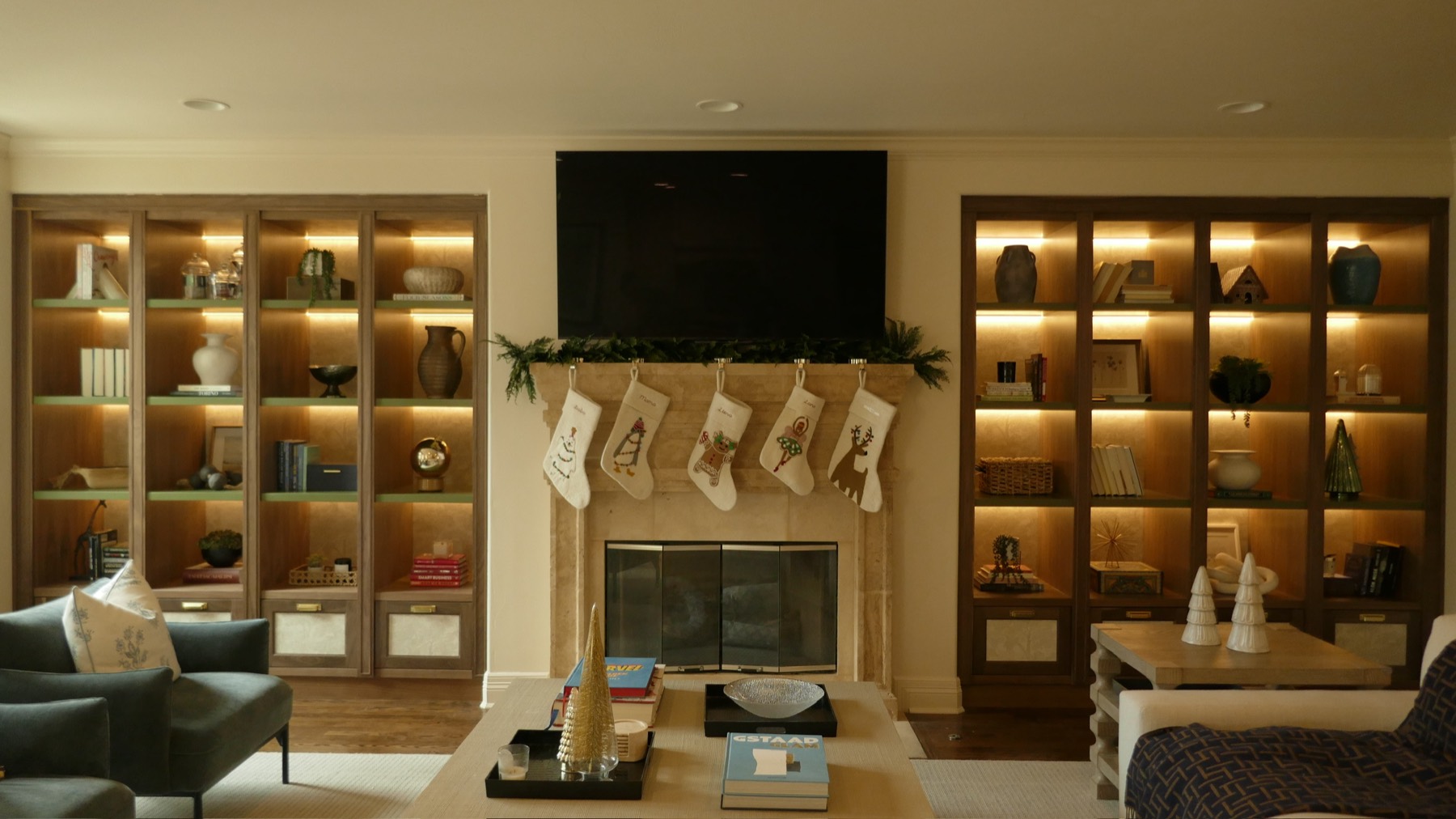
Renovating a Hilltop home in Denver usually means working with a generous, well-built house on a big lot just east of Cherry Creek. Most projects are about updating the inside for how people live now while keeping the settled, established feel that makes the neighborhood what it is. Expect whole-home remodels, basement finishes, and high-end kitchen and bath work rather than starting from nothing.
What are Hilltop homes like?
Hilltop homes are large, stately, and built to last, set on wide boulevards under mature trees. You'll find Tudors, period revivals, and mid-century ranches sitting side by side, many within a short walk of Cranmer Park and its mountain-view terrace. The lots are big, the streets are quiet, and the housing stock has good bones. A lot of these homes have already been thoughtfully updated or scraped and rebuilt with high-end finishes, so the bar for a Hilltop interior design project tends to be high.
What kinds of renovations suit a Hilltop home?
The renovations that suit Hilltop best are the ones that respect the size and character of the house. Because the homes are generous to begin with, the work is usually about quality and flow rather than square footage for its own sake. Common Hilltop Denver home remodel projects include:
- Whole-home remodels that modernize systems and finishes without gutting the character
- Basement finishes that turn unused lower levels into real living space
- Additions that read as original rather than bolted on
- High-end kitchen and bath work built around how the family actually cooks and gets ready
The mistake we see is over-renovating a home with good bones into something that could be anywhere. The better move is to edit.
Why are basements such a popular Hilltop project?
Basements are popular in Hilltop because the homes are big and the lower levels are often huge and unfinished, which is a lot of square footage sitting idle. Finishing one is usually cheaper per square foot than adding on, and it doesn't change the footprint or the street view. That's space for a family room, a home gym, a guest suite, or a playroom that keeps the toys off the main floor.
Our Hilltop House project is a good example. The basement became a family room with a walnut built-in, a home gym, and a playroom, which let the family spread out without touching the established upstairs at all.
A finished Hilltop basement is the rare renovation that adds a whole floor of living space without changing a single thing anyone sees from the street.
How do you renovate a Hilltop home without making it feel new-and-generic?
You keep the elements that give the house its character and you're disciplined about what you change. Renovating a Hilltop home well means matching trim profiles, keeping good original details, and choosing materials with some weight and warmth, like walnut, plaster, and natural stone, over whatever's trendy this year. Layouts can open up where it makes sense, but a 1940s home doesn't need to pretend it was built last spring. The goal with any Hilltop whole-home remodel is a house that feels updated and entirely at home on its block, not parachuted in.
Quick answers
Is Hilltop a good neighborhood for a major remodel?
Yes. The homes are large and well-built on big lots, which gives you room to work, and the neighborhood's high standards mean quality renovations hold their value.
What's the most common Hilltop renovation?
Whole-home remodels, basement finishes, and high-end kitchen and bath work are the most common, since the houses are generous enough that the focus is on quality and flow rather than adding size.
Can you modernize a Hilltop home without losing its character?
Yes, by keeping original details that are worth keeping, matching trim and materials, and only opening up layouts where it genuinely improves how the house lives.
Hilltop rewards a light hand and good materials, which is exactly how we approached the Hilltop House basement. If you're weighing a remodel of your own, that's the kind of work The Curated Room is built for: design and build under one roof, tuned to the home and the block it sits on.
← Back to The Journal